
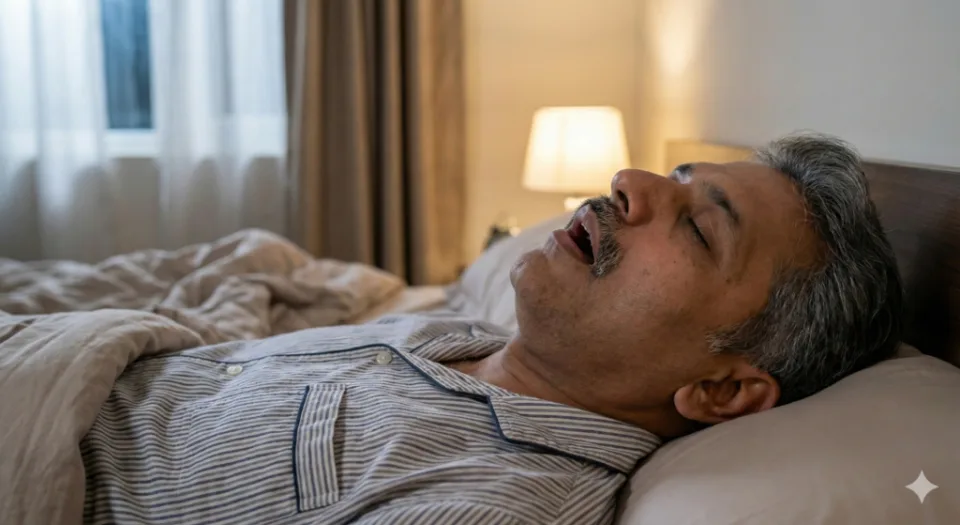
Understanding Habitual Snoring: Clinical Overview
Snoring happens when inhaled air hits resistance anywhere from the nostrils to the back of the throat, causing the soft palate, uvula, and pharyngeal walls to vibrate like a loose sail. Even when blood oxygen remains normal (primary snoring), loud vibrations disrupt partner sleep, trigger morning sore throats, and strain relationships.
Many patients invest in nasal strips, herbal drops, or over-the-counter mouthpieces without ever checking whether the obstruction starts in the nose (deviated septum, allergic turbinates) or in a bulky, lax soft palate and tonsils.
At our Garfa and Kalikapur ENT chambers, Dr. Swagato Roy conducts thorough nasal and throat endoscopy—pairing sleep screening with targeted medical airway opening, lifestyle correction, or minimally invasive palatoplasty and DISE-guided snoring reduction.
Kolkata Climate, Lifestyle & Local Triggers
Kolkata’s humid air, bedroom dust mites, and evening AC exposure frequently swell the nasal turbinates overnight, flipping quiet sleepers into chronic mouth-breathing snorers.
Common Symptoms Patients Notice
- • Persistent loud snoring audible outside the bedroom across most nights
- • Dry mouth, scratchy throat, or nasal congestion upon waking
- • Snoring noticeably louder when sleeping flat on the back or after evening alcohol
- • No witnessed choking gasps or severe daytime sleepiness (differentiating from OSA)
Urgent Red-Flag Warning Signs
- ! Witnessed silent pauses lasting 10+ seconds followed by loud snorting gasps
- ! Waking up breathless or experiencing severe daytime fatigue and morning headaches
- ! Associated mouth breathing and daytime irritability in a growing child
Primary Causes & Risk Factors
- → Blocked nasal breathing forcing high-velocity mouth inhalation
- → Elongated or redundant soft palate and hypertrophied uvula
- → Enlarged tonsils or pediatric adenoids narrowing the behind-palate airway
- → Supine sleeping posture, overweight, and evening muscle-relaxing sedatives
How Dr. Swagato Roy Diagnoses Habitual Snoring
Diagnostic Nasal & Throat Endoscopy
Maps nasal septal spurs, turbinate swelling, adenoids, tonsil size, and palatal redundancy.
Sleep Apnea Screening & DISE (If Surgical Palate Care Planned)
Excludes hidden Obstructive Sleep Apnea and confirms pure palatal flutter before palatoplasty.
Stepwise Medical & Surgical Treatment Ladder
Nasal Allergy & Sleep Hygiene
Evening saline wash, topical steroid nasal sprays, dust-mite pillow covers, and lateral sleeping posture.
Custom Oral Appliance / Nasal Airflow Correction
Mandibular advancement splints or endoscopic septoplasty/turbinoplasty when nasal blockage drives mouth snoring.
Palatoplasty / Coblation Snoring Reduction
Tissue-stiffening palatoplasty, targeted uvulopalatal remodeling, or pediatric endoscopic adenoidectomy.
Prevention & Long-Term Self-Care Tips
- ✓ Elevate the head slightly or stitch a posture cue to stay sleeping on your side.
- ✓ Manage allergic nose block consistently rather than relying on temporary decongestant drops.
- ✓ Maintain regular sleep timings and reduce excess body weight gradually.
Connected Clinical Care Pathways
Explore Throat, Voice & Sleep Hub →Treatments & Surgeries
Related Conditions
Associated Symptoms
Habitual Snoring: Patient FAQs
Can fixing a blocked nose alone stop snoring?
When snoring is triggered mainly by nasal congestion forcing mouth breathing, clearing the nasal passage medically or surgically reduces snoring volume substantially, though palatal vibration may also need attention if severe.
What is palatoplasty for snoring?
Palatoplasty gently stiffens and reshapes redundant soft palate tissue using radiofrequency, Coblation, or suture-lift techniques, reducing flutter vibration with far less recovery discomfort than older radical UPPP.
Do anti-snoring sprays and chin straps actually work?
Over-the-counter throat sprays lubricate briefly without fixing structural narrowing, and chin straps fail if the nose is blocked. Identifying the exact anatomical choke point first gives lasting results.
How do I know if my partner needs a sleep study?
If snoring stops briefly in silence and restarts with a gasp, snort, or body jerk—or if daytime drowsiness and high blood pressure are present—a sleep study is needed to rule out sleep apnea.
Why do children start snoring suddenly during winter?
Winter viral colds and allergies inflame the adenoids and tonsils in the narrow pediatric airway, causing loud mouth-breathing snoring that should be graded if it persists beyond 4–6 weeks.