
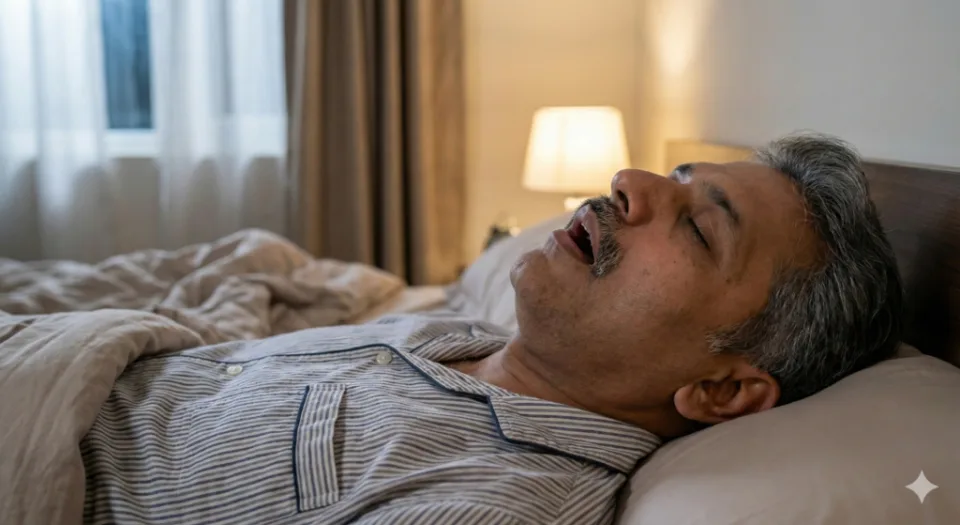
Understanding Obstructive Sleep Apnea (OSA): Clinical Overview
Obstructive Sleep Apnea (OSA) occurs when muscles of the soft palate, tonsils, tongue base, or throat sidewalls relax during deep sleep, repeatedly narrowing or sealing off the airway for 10 seconds or longer. Bed partners often witness loud snoring interrupted by silent pauses followed by sudden choking gasps.
In children, enlarged tonsils and adenoids are the overwhelming culprit—causing restless sleep, mouth breathing, morning crankiness, and poor school focus. In adults, nasal blockage, redundant soft palate tissue, retrognathia, and central weight gain interact across multiple airway levels.
Before recommending any operation, Dr. Swagato Roy integrates home or lab sleep study (polysomnography) data with Drug-Induced Sleep Endoscopy (DISE)—watching the upper airway dynamically under brief simulated sleep so treatment (CPAP, oral appliance, nasal clearance, or UPPP/palatoplasty) addresses the true site of collapse.
Kolkata Climate, Lifestyle & Local Triggers
Late dinners rich in heavy carbohydrates, untreated urban dust allergies causing nasal blockage, and under-diagnosed hypertension frequently delay OSA diagnosis in South Kolkata working professionals.
Common Symptoms Patients Notice
- • Loud habitual snoring broken by witnessed breathing pauses and gasping
- • Unrefreshing sleep, morning headaches, and uncontrollable daytime sleepiness
- • Waking up multiple times at night with dry mouth or racing heartbeat
- • In children: open-mouth sleeping, hyperextended neck posture, bedwetting, or poor concentration
Urgent Red-Flag Warning Signs
- ! Drowsy driving episodes or nodding off mid-conversation
- ! Resistant high blood pressure, arrhythmias, or poorly controlled diabetes alongside severe snoring
- ! Marked chest indrawing or bluish lips during a child’s sleep
Primary Causes & Risk Factors
- → Adenotonsillar hypertrophy (primary cause in children aged 3–10)
- → Floppy elongated soft palate, bulky uvula, and bulky tongue base
- → Severe deviated nasal septum (DNS) or nasal polyps increasing inspiratory suction collapse
- → Neck circumference excess, hypothyroidism, and evening alcohol or sedative use
How Dr. Swagato Roy Diagnoses Obstructive Sleep Apnea (OSA)
Awake Nasal & Laryngeal Endoscopy (Muller Maneuver)
Evaluates nasal airflow obstruction, tonsil size, palatal webbing, and base-of-tongue crowding while awake.
Polysomnography (Level 1 / Level 3 Sleep Study Coordination)
Measures Apnea-Hypopnea Index (AHI) and overnight oxygen desaturation severity.
Drug-Induced Sleep Endoscopy (DISE)
Gold-standard dynamic endoscopic visualization of exact airway collapse levels during sedated sleep before sleep surgery.
Stepwise Medical & Surgical Treatment Ladder
Weight, Position & Nasal Optimization
Side-sleeping training, avoiding late alcohol/sedatives, weight reduction, and nasal sprays/septoplasty to lower CPAP pressure needs.
CPAP / Mandibular Advancement Device
First-line gold-standard therapy for moderate-to-severe adult OSA, paired with ENT nasal care to boost mask comfort.
Targeted Sleep Surgery
Coblation adenotonsillectomy (first-line in children), Modified UPPP / Expansion Sphincter Pharyngoplasty, or palatoplasty guided by DISE.
Prevention & Long-Term Self-Care Tips
- ✓ Avoid alcohol, sleeping pills, and heavy meals within 3 hours of bedtime.
- ✓ Keep nasal passages clear before sleep using saline rinses or prescribed allergy sprays.
- ✓ Maintain a healthy neck circumference and prioritize sleeping on your side rather than flat on your back.
Connected Clinical Care Pathways
Explore Throat, Voice & Sleep Hub →Treatments & Surgeries
Related Conditions
Associated Symptoms
Obstructive Sleep Apnea (OSA): Patient FAQs
Is snoring always the same as Obstructive Sleep Apnea?
No. Primary snoring produces vibration noise without oxygen drops or airway closure, whereas OSA involves repeated breathing pauses that strain the heart and brain. Only an overnight sleep study can reliably separate the two.
Can surgery cure Obstructive Sleep Apnea completely?
In children with enlarged tonsils and adenoids, Coblation adenotonsillectomy cures OSA in over 80–90% of cases. In adults, surgery significantly lowers AHI, improves CPAP tolerance, or resolves mild-to-moderate palatal OSA when selected accurately via DISE.
Why does Drug-Induced Sleep Endoscopy (DISE) matter before surgery?
An awake throat looks completely different from a sleeping throat. DISE reveals whether your airway collapses at the soft palate, tonsils, tongue base, or epiglottis—preventing ineffective one-size-fits-all throat operations.
Why do I struggle to tolerate my CPAP machine?
High nasal resistance from a deviated septum or swollen turbinates forces higher CPAP air pressures, causing mask leaks and dry nose. Fixing nasal airflow medically or surgically often makes CPAP comfortable overnight.
When should a snoring child be evaluated for sleep apnea?
If a child snores loudly more than 3 nights a week, breathes constantly through the mouth, pauses during breathing, or seems unusually restless or tired at school, prompt ENT airway grading is essential.